

The Fourth Frontier
Internet 4.0, Fourth Places, and McKerracher Family Farm as the Base of Operations

This piece is uncharacteristically long. As it should be, considering the fact that it weaves personal narrative, philosophical insights, historical analogies, and futuristic speculation into an argument about the evolution of the internet and the need for “Fourth Places.” The central thesis is that we’re entering Internet 4.0, where online communities ground themselves in real-world hubs like McKerracher Family Farm. I establish historical precedents, connect these to personal experiences, and make some predictions about the future. Part theory, memoir, and manifesto, this is a great place to begin thinking with David McKerracher at Theory Underground. With all that said, it is too long for email, so you’ll need to finish it from the app or website.
New Frontiers
The early settlers were thought crazy when they headed for the New World. The same was true of our Founding Fathers when they broke with England—and yet again with those who pioneered the westward expansion. Despite the naysayers, pioneers always take great risks as they forge new paths. Eventually the children of the doubters follow in their footsteps.
The history of expansion is always tragic, both for those who leave and for those who remain, not to mention anyone who, finding themselves in the path of the settlers, hoped their lives could go back to normal. Marx’s description of modern capitalism, “All that is solid melts into air” is half of an ironclad rule. Deleuze and Guattari provide the other half with their concept of “reterritorialization.” If you think you can stay put and get comfortable, you will be sorely mistaken. However, if you take a line of flight from the status quo, you have an opportunity of striking gold before the rush.
These principles of change apply nonetheless to the internet. Just think of the entrepreneurs, engineers, and investors of PayPal, Amazon, or Google. There was a time when they were also thought crazy. Every step of the way, there are those adventurers who move into the new frontier—leaving behind those who remain incredulous about the “next thing.”
That incredulity was something I remember well from my childhood. The assumption that nothing much will change used to be much more common. This brings to mind a video clip of a 1999 BBC Newsnight interview with David Bowie that has recently been making the rounds.
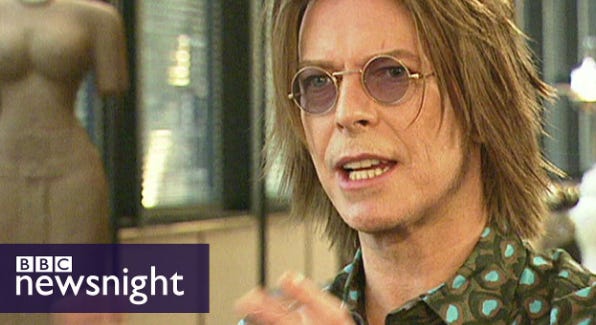
The interviewer expressed disbelief that the home computer or internet would really change that much, dismissing it as just a tool whose social impact was being hugely exaggerated. Bowie’s response:
“I don’t think we’ve even seen the tip of the iceberg. I think the potential of what the internet is going to do to society—both good and bad—is unimaginable. I think we’re actually on the cusp of something exhilarating and terrifying.”
The interviewer pushed back, repeating that the internet is just a tool. Bowie doubled down in a Land-adjacent register: “No, it’s not. It’s an alien life form.”1
As a child in the 90s, I had an acute sense that this home computer, with its alien-sounding dial-up connection, was going to change everything. I still remember people scoffing at this notion. They, like that interviewer, would not see the potential.
What the home computer with internet access ushered in was the dawn of what we at Theory Underground call “the cyber era.” So far it has moved through three distinct phases. We currently find ourselves in the midst of the fourth frontier.
The First Frontier: Internet 1.0
Focused on info delivery via directories and early e-commerce, Internet 1.0 was abstract and inaccessible pre-home computers. Prior to the normalization of regular people logging onto AOL chat rooms, the internet was one-directional for all but the coders and companies, and even then, it required a combination of expertise and capital to even access.
Internet 1.0 marked the web’s early phase from the late 1980s to early 2000s. This was an internet of static, read-only pages with text and basic graphics, enabling one-way communication where experts created content for passive users. There were no comments or uploads. There was none of what Hans-Georg Moeller and Paul D’Ambrosio call “profilicity.”2 In other words, the internet was a lot more about retrieving information than curating an identity via activity that centers around a profile.
The Second Frontier: Internet 2.0
Does anyone else remember the AOL, “You’ve got mail”? Iconic. Looking into that old desktop screen, using floppy disks to play bootleg games relatives gave us, and connecting with people we would have never otherwise talked to.
AOL was the bridge that simplified access, ushering in the early days of Internet 2.0. Since then, 2.0 went through basically three phases that led up to where it is now:
AOL’s chat rooms and portals in the 1990s,
MySpace’s customizable profiles and social networking in the mid-2000s
Twitter/Facebook’s real-time feeds and global communities by the late 2000s.
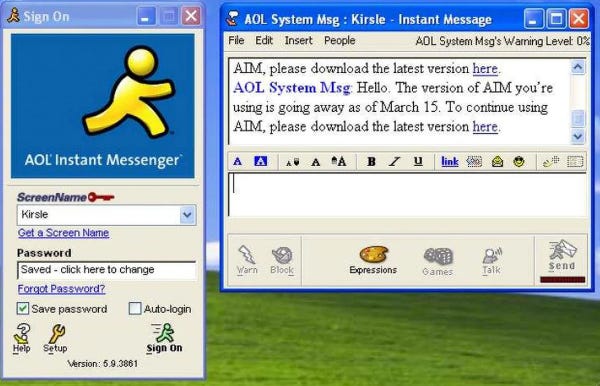
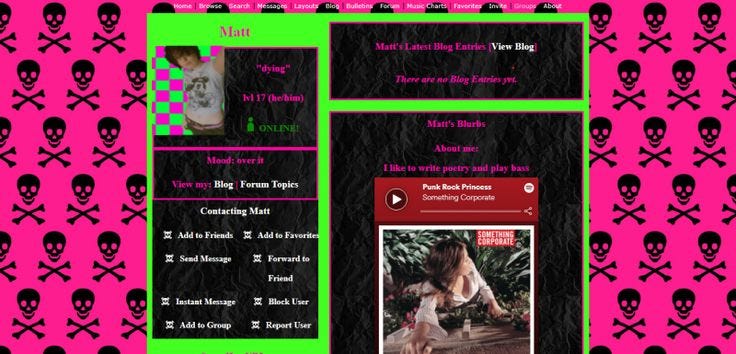
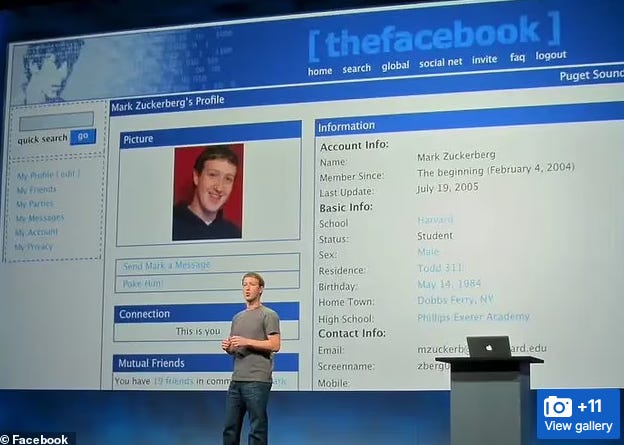
The internet most of us think of emerged around 2004. This interactive read-write era shifted from static pages to dynamic platforms with blogs, wikis (e.g., Wikipedia), user uploads, comments, and tools like AJAX/RSS/APIs, “democratizing” content creation and fostering e-commerce/social media growth that paved the way for what was to come…
Late Stage 2.0: TikTokification and Crossing the Threshold of the Dark Forest
Between 2018 and 2025 we saw everything change. “TikTok” figured out peak entertainment, which led to the TikTokification of YouTube, Instagram, and Facebook via the introduction of Shorts, Stories, and Reels—and, my wife added when reading this, the boiling point of paid commercial (sponsored) content. You want to see what your friends are up to? Good luck, you’re going to see three times as many commercials than updates from friends.
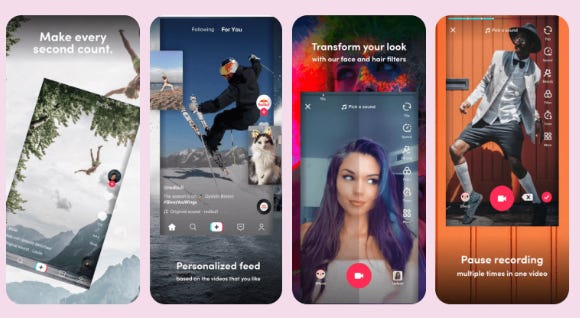
TikTokification could be called Extreme Individualizing Entertainment, i.e., addictive content that isolates us while leading to cognitive decline and the loss of attention spans.
This “Late Stage 2.0” within which we find ourselves could very well be a sort of investment bubble that we are about to watch blow up before our eyes, leaving in its wake nothing but commercials and bots. You won’t find anything better on this “Dark Forest Theory of the Internet” than by Art Chad in his piece, “You’re running out of time to hide.”

To quote from that piece:
We are spiraling toward a world where the open web, like these lobbies, becomes a hostile wasteland. Where logging on is tantamount to jumping in a cage with a tiger. The ‘Dead Internet’ isn’t just a theory anymore; the threshold has been crossed, and it is already too late… [The Dark Forest Theory of the Internet claims that] as humanity is increasingly drained from the internet, as exposing oneself becomes evermore dangerous, the internet seems more lifeless. People are there, but they are hiding. Hiding in encrypted chats, message boards, forums, discords, private Instagram pages, or private black-ops 2 servers.
Whether we have already crossed the threshold or not, the fact remains that the mainstream platforms are not getting any better. Could some AI regulation save the day? It is most likely too late. Once people have more or less stopped using a platform, good luck bringing them back.
The old social media platforms will continue to feel like a ghost mall where the shop fronts are sponsored content, recommended friends you would prefer not to see, and occasional glimpses of old friends who you should probably just call up on the phone.
The Third Frontier: Internet 3.0
Internet 3.0 is the movement towards decentralized evolution. It emphasizes blockchain technology, smart contracts, user-owned data, semantic search, AI integration, and peer-to-peer interactions to shift control from centralized platforms to individuals.
My original thesis argued that “late stage 2.0” and what we know today as 3.0 are inseparable, literally two interdependent sides of the same coin. Every stage of the commercial mainstream Internet has always included its code-slinging underbelly where libertarians, anarchists, and rogue professionals collaborate to push the boundaries.
This freer side of the internet has grown in the underbelly of the mainstream platforms as they build their empires. Blockchain became a thing right around the time of the mass migration from MySpace to Facebook, and Ethereum’s smart contracts, as the second phase of the blockchain, coincided with the majority of baby boomers joining Facebook.
Each of these evolutions was dependent on the technology of the time, which was always made accessible by mainstream adoption and funding. Each evolution of Internet 3.0 during the course of Internet 2.0 would have been impossible without the evolutions of the smartphone and its universe of apps that enabled constant connectivity, whether that was for trading bitcoin or checking Facebook notifications.
However, I have set aside this “two sides of the same coin” thesis and am going to stick with the conventional narrative—for the sake of clarity. Internet 2.0 describes two-way communication on corporate monopoly platforms, whereas Internet 3.0 is all about decentralization. Just because they co-exist and are inter-reliant does not mean that they are necessarily inseparable. Internet 3.0 could continue even if Internet 2.0 enters the Dark Forest stage.3
“Internet 3.0” is often spoken of as a New World beyond corporate monopoly capture. I go back and forth on how dependent it might be on the Old World, and whether Internet 3.0 will indeed serve as a useful bridge to the true New World, which is the Fourth Frontier.
Probing the Newest Frontier
The newest frontier is one that I have been exploring for the last three years of Theory Underground by going to people and places. In 2022, during the time that I was preparing to launch Theory Underground, my wife (fiancée at the time) and I went to Europe for our “graveside tour.”4
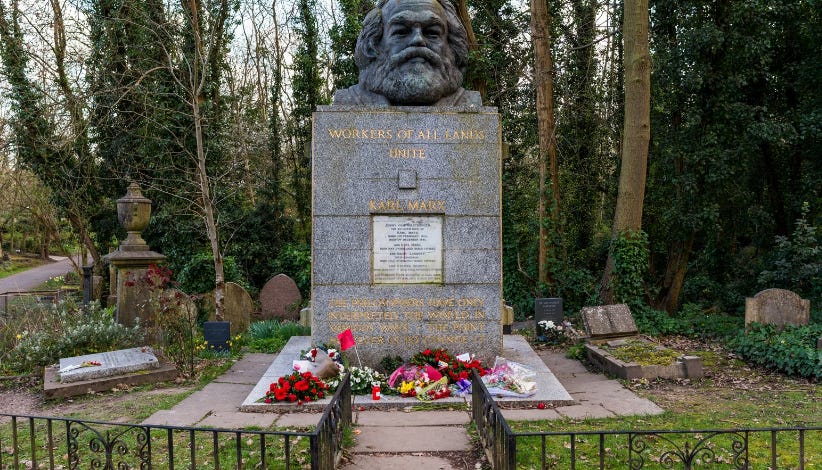
I took her to the headstones of nine philosophers, where she interviewed me about their lives and work. Along the way we met a lot of people from the internet. Notice that I did not say we “traveled all over to meet up with people from the internet, and along the way visited some historic sites.”
The inversion that put “the dead” first was no accident. We visited those philosophers whose thinking speaks to us more still today than ever. A common refrain from people finding out about this tour is something along the lines of, “I like philosophy but I don’t see the point of visiting the grave of a philosopher.” The answer is about place. It’s about being-in-the-world.
Every person, if they matter, matters because they were born into a specific time and place in the world. What matters is what they did in that context, and little can be understood without this background knowledge.
Reading philosophers like Descartes, Marx, Freud, Hegel, Husserl, Heidegger, Levinas and Bourdieu before, during, and after the visitation of their burial sites has only helped ground them better for me. Sure, the world around those gravesites has changed, but I nonetheless have a multidimensional and worlded sort of anchor to these otherwise purely abstract people.
With the founding of Theory Underground and the two years of our Critical Media Theory seminar, the tour evolved. The goal was to make it known that we are, as the Underground Theory Volume 1 subtitle asserts, “Coming to a city near you.” I felt then, and believe this proved true, that by always being on tour and announcing new cities, we would help convey to our niche follower base that we are not out of reach. We are not the kinds of people you can follow passively from a distance without realizing that your choice to maintain that distance is just that: a choice.
The idea was to break out of the stultifying, isolating, and parasociality-fostering conditions of Internet 3.0. Those three years of touring took us to the following countries and cities:
In Europe: Brussels, Belgium. Paris, France. Berlin, Germany. Ljubljana, Slovenia. Linz, Austria. Vienna, Austria. Krakow, Poland. Glasgow, UK. London, UK. Oxford, UK. In Canada: Vancouver, Toronto, Wellington (McLuhan Institute), and Kingston. In Mexico: Aguascalientes, Puerto Vallarta, and Guadalajara. In the United States: Breckenridge, CO. Kansas City, MO. Burlington, VT. New York City, NY. West Long Branch, New Jersey. Washington, D.C. Chicago, IL. Denver, CO. Las Vegas, NV. Los Angeles, CA. Reno, NV. Ashland, OR. Portland, OR. Seattle, WA. Spokane, WA. Billings, MT. Boise, ID. Coeur d’Alene, ID. Lynchburg, VA. Columbus, OH. Pomona, CA. Phoenix, AZ. Albuquerque, NM.
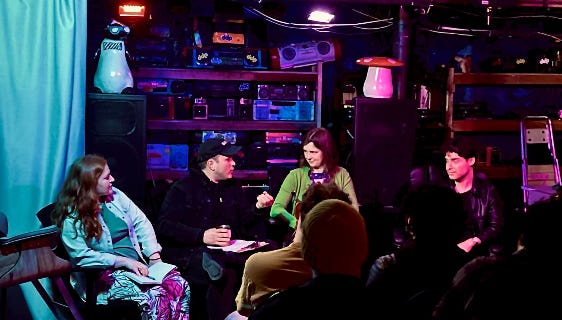
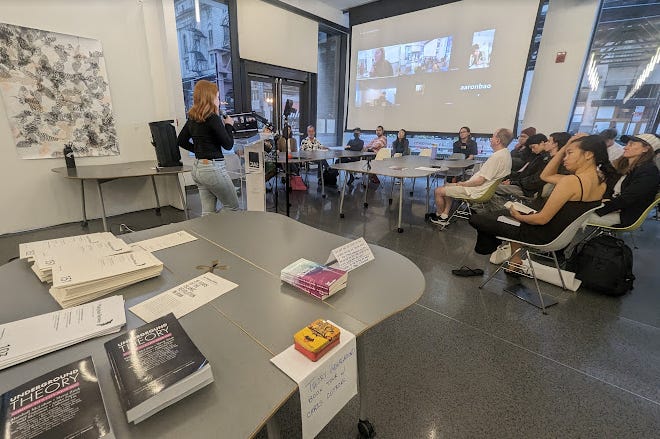
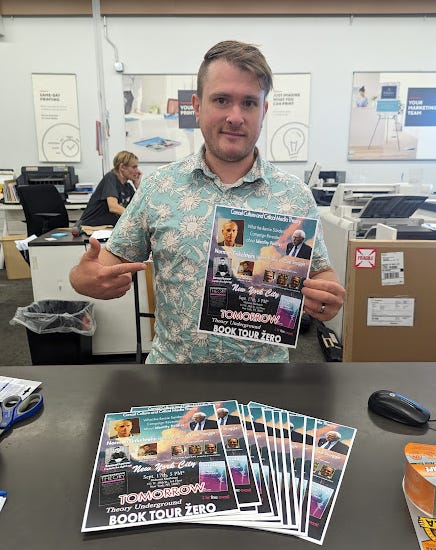
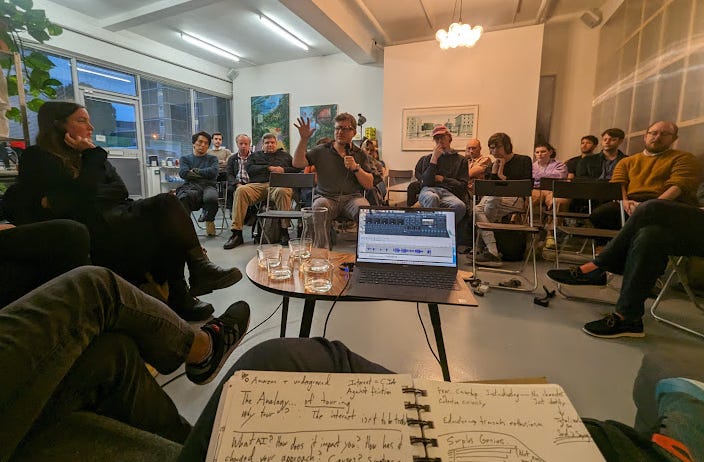
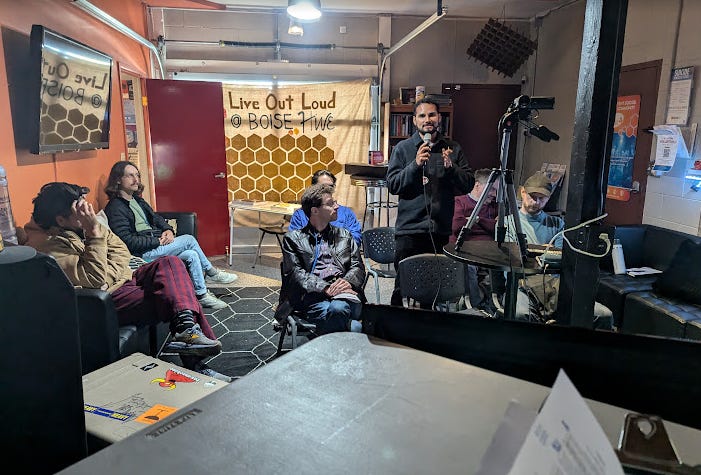
All of this was achieved on a shoestring budget with the help of a few modest donations from benevolent patrons. We never turned a profit in terms of finances, but we learned a lot traveling by van from coast to coast and flying abroad. Our Critical Media Theory was thus able to ground itself. This was not like celebrities or rock stars who tour the world, only seeing the insides of hotel rooms, airports, and stadiums. This was a crazy experiment in breaking through what we took to calling “the fifth wall.” Whereas the fourth wall is broken when an actor addresses the audience, the fifth wall is broken when content creators break out of the internet and into IRL spaces (IRL = “in real life”). This is how we met a lot of our friends, as well as learned some hard lessons.
The hardest lesson is that some of your favorite people will not be your favorite for long if you actually meet them. I knew that if I was going to build my little castle on the internet, that I would be wasting decades of my time to do so without also meeting people IRL. My hunch was based in some formative experiences with online dating back in the early aughts.
Online, you can get along with someone famously but once you meet in-person the virtual ground of that relationship might just fall out from under you. Then there’s just something “off” about the dynamic. What’s going on there? Perhaps, unbeknownst to yourself, you actually did not like them as a person so much as a disembodied voice or image that was available by the click of a button. We liked “something” of them when de-worlded by what Heidegger called enframing, the way technology puts us all on-call at the disposal of the world economy.5
Online, our libidinal economy becomes accustomed to the absence of major parts of the being of others, e.g. their habits, their friends, their world. I think a lot of people know this, but they choose to avoid real life contact in an attempt to preserve their little fantasy bubble. The identities that they formed through the last fifteen years of the internet, phases 2 and 3, require certain kinds of content, especially the human relationship kind, to be kept at a distance. Social distancing thus becomes the demand of those whose fragile sense of reality requires maintaining the other at arm’s length.
I think of Cypher from The Matrix, choosing to re-enter the Matrix and willfully forget that it was just a simulation.
“You know, I know this steak doesn’t exist. I know that when I put it in my mouth, the Matrix is telling my brain that it is juicy and delicious. After nine years, you know what I realize? Ignorance is bliss.”
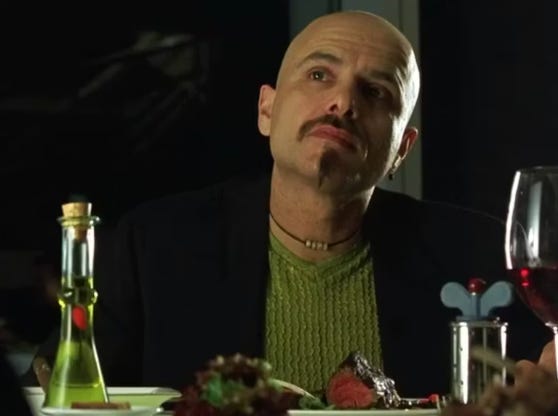
People who avoid real and repeated human contact in real places where real things are happening and real work must be done are like Cypher: They would rather embrace the comforting illusion of the simulation than face the harsh truths of reality.
Now that you understand the theory and practice that has led Theory Underground to do so much to break from the situation and test relationships in real life, both on tour and through our conferences and retreats, I am now ready to share the discovery of the Fourth Frontier that we have been pioneering together.
The Fourth Frontier
Over the course of those three years of Theory Underground tour, we were more or less rootless. I had my tiny house, “Foothold,” for a while, which was parked on various properties. Other times we were renting. Rootlessness means having nothing to do with the place in which you are, i.e., the irrelevance of place. My wife and I hated it. We wanted to settle down into one spot where we could reliably be for years, to have kids and raise a family. We looked outside of the country more than within because, as college adjunct professors who were part-timing at an Amazon warehouse, there was no hope of ever buying property in the U.S. We strongly considered parts of Mexico and Finland as viable options for home ownership if we were to continue with “higher education.” In the end, we would prefer not to. We chose to live close to my family and the place of my childhood. We moved to McKerracher Family Farm where we are becoming its second generation, learning the ropes and taking over the reins. This is not just any old place, but the kind of place you have to understand in order to really know me. It’s my context.
But McKerracher Family Farm is not just a farm, nor the place where we are settling down to exit from the world. Rather, it is becoming an “IRL hub”—what I call a decentralized central node of Internet 4.0. If Internet 3.0 was about identities formed online, either on the captured mainstream or free underground sides, then Internet 4.0 goes beyond identity formation via simulated (de-worlded) relationships and grounds out in practice, place, and character formation.
Internet 4.0 is about hybridity, synthesis, and the iterative relationships that grow between the internet and IRL hubs. Internet 4.0 is the return of locales and locals—of places and faces. What I am calling The Fourth Frontier is where the internet turns itself inside out. If Internet 3.0 spawned an underbelly of decentralization and zero-trust ownership networks, then Internet 4.0 is birthing an underground of real-life hubs that will serve as constellations for charting course into a new way of life.
Fourth Places
The hardware of Internet 4.0 is IRL hubs—not random rentals that will come and go. What Internet 4.0 demands is that we have Fourth Places. Neither home, work, or “third places.” This connection and way of putting it is where full credit must be given to Paul McNeil (PBD McNiel), the founder of The Wagon Box.
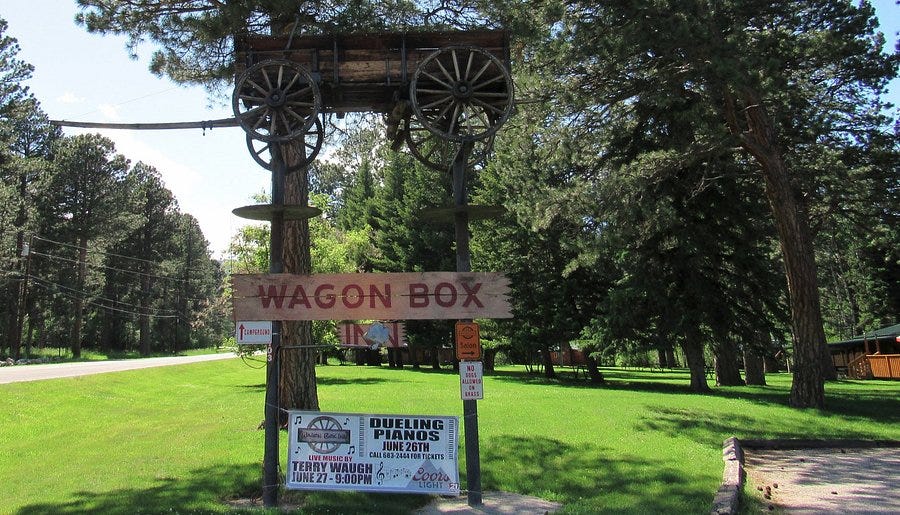
After a homesteading symposium at The Wagon Box last week, I sat down for a podcast recording with McNeil at his home in Montana where we reflected on the symposium and this bigger thing of which we are a part.
On “Fourth Places,” McNeil put it this way,
“Ray Oldenburg wrote a book called Third Places, which coined this term about how healthy societies have these places where people get together. It’s called the “third place” because the first place is the home and the second place is work. But it’s this third place where basically cultural formation happens. Think coffee shops, barber shops, where the old guys or the women are saying, “Hey, this guy’s cool. This guy’s not cool. This couple’s having problems,” or whatever, and they have those social pressures, but also the connections where information and cultural heritage is passed on. So that’s third places.
With the fracturing of societies over the last 100 years, really, but especially accelerating, what we’ve actually found is that things were falling apart quite some time ago. Decades. And things are actually coming together more online. For better or for worse, I think it’s better than nothing. Sure, we might wish for the bygone days of yore when all these guys were having wonderful conversations in tea houses. Turns out, probably most people weren’t. Most people were like the characters in a Willa Cather novel, like the one smart guy in the middle of nowhere Kansas who hates his life. But now you can form groups online. So you have chat groups and you have Facebook groups and you have all these different online communities that really blossomed during COVID. And so the idea of a fourth place is to have a physical place where online spaces can have recurring IRL, in real life, connections. Not just IRL connections, because there are a lot of online places that are like, “Hey, let’s rent an Airbnb, a mansion, or random place. And so it’s not over time chronologically embodying. You might have this little cabin in the woods you only go to maybe every three years. But if you go there every three years or whatever, you start forming an embodied, grounded relationship with the people, with the place. It has a connection there. So that’s the idea of the Wagon Box.”
What I say next in the podcast cuts to something deep I’ve been theorizing over the last fifteen years of travel between CDA, the region of my upbringing, Boise, where I lived for 10 years, and the rest of the world. It’s the idea of “temporal sediment”:
“Your memories are like temporal sediment built up in these places. I think a lot about how when I walk around certain areas, things come back to you. And it’s not just in your brain floating around like it would have come to you if you were in some other place. No, it’s rooted here.”
McNeil responded:
“It gives you a common ground with somebody you’ve met. So the idea of the Wagon Box is sort of a hardware that can be a Fourth Place for various different what I think of as software or like digital communities, different adjacent ones. So say you meet somebody from Justin Murphy’s Other Life. Or here’s a Theory Underground guy. And they’ve both been having events at the Wagon Box, maybe even just once a year, every other year for 10, 15 years. Their relationship is, I think, deeper, even though they’ve never met, because they have this actual common, like, “Oh, I know what that creek sounds like. Oh, yeah, I rode that, I did a cold plunge in the same spot you did.” And it’s like, when you meet somebody from your hometown, you might have never, ever met them. Maybe they’re a whole different generation. They lived in your hometown 20 years prior. But immediately, you have something in common that’s more real than if you meet somebody, “Oh, we both like Pokemon” or whatever.”
You will be able to hear the rest of the podcast episode these quotes are from in a future post.
Beyond their grounding function, the last important note on Fourth Places is that they are radically idiosyncratic and liberating, in stark contrast to what internet communities become without grounding outside of the corporate mediation.
Something that I left out of the above chronology was the rise of censorship and surveillance. Where corporate-state-capital interests all converge is on the need for Big Data, which allows for predictive power—both absolutely necessary for business and government: control and profit.
Entire books have already been written about these topics, and we can be sure many more are being written this very moment, considering how much corporate and state censorship has been exposed between the time of the Twitter Files and our current Post October 7th World Wide Web (where accusations of “antisemitism” have become the catch-all used to purge online platforms and universities).
Fourth Places are founded by people who felt suffocated by, or saw no future in, the kinds of “real” “places” that were being siloed and censored for the sake of corporate profits or government control. This goes beyond cancel culture and includes the kinds of self-censoring that have become ubiquitous. People now say, with no apparent irony, that if things keep going this way they will “unalive” themselves. They call pornography “corn” and pedophiles “PDFs.”
This lingo is not cute next gen speak, it is the attempt to communicate through channels that have so much corporate control that you will be censored if you so much as say the words “suicide,” “porn,” or “pedophiles.” Then of course there’s the somewhat new phenomenon of “sensitivity reader” activism. Let’s not even go there. The point is that the mainstream has gotten to be utterly ridiculous and Fourth Places are started by people who seek freer relationships unmediated by such stultifying institutions.
To sum it up, Fourth Places provide internet communities with real life grounding over repeated periods of time. Such places cultivate and sustain community. Fourth places are owned and operated by real leaders, families, or communities with definite values. Fourth Places have their own personality, history, and future. They may also be the future for how we live on this planet.
McKerracher Family Farm as a Base of Operations for Theory Underground and Canon: TCG
A year ago my wife and I moved to McKerracher Family Farm to learn the ropes and take the reins as the second generation. As our base of operations, McKerracher Family Farm has hosted a variety of in-person homestead-related classes, broader regenerative-related community events such as our amazing farm-to-table dinners and, during September of last year, the Theory Underground Retreat. Now we are planning the 2026 TUCON and CANONFEST, which will take place August 27-29.
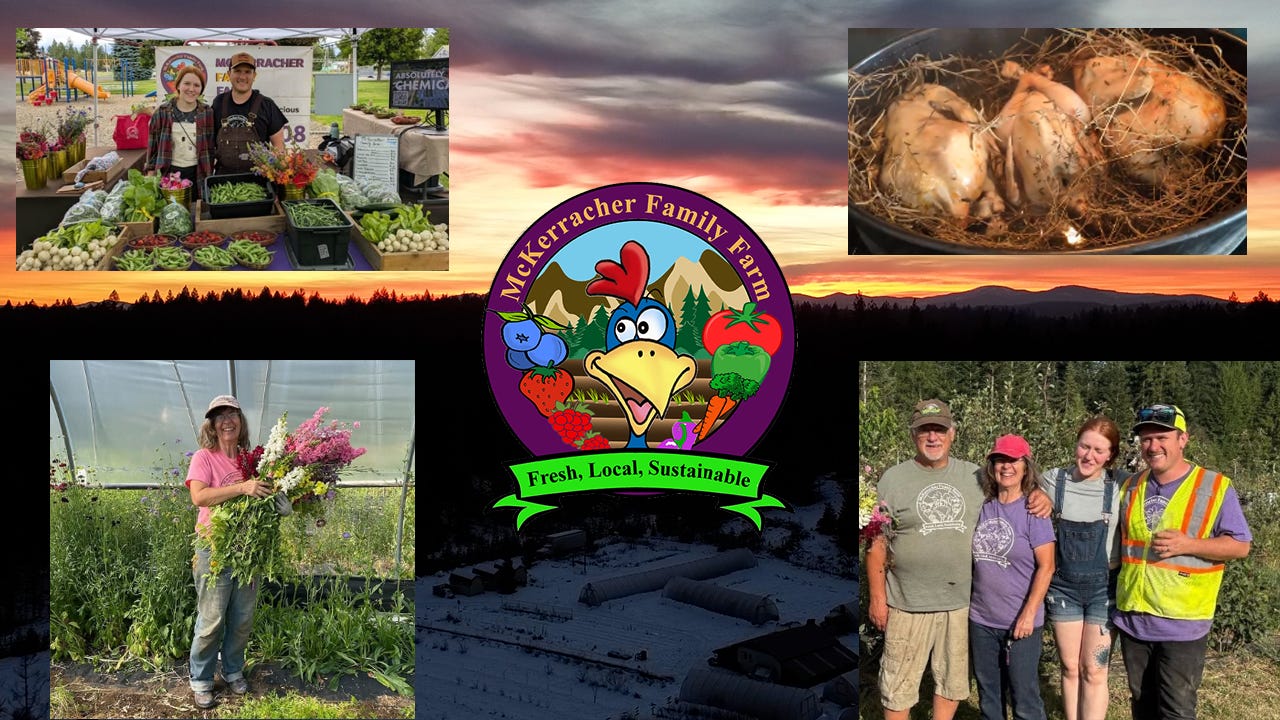
The events that Theory Underground organizes are not just conferences or anything resembling the standard retreat or festival. The lessons learned from the last three years of the international tour, and the previous 15 years of academic travel, have taught me a lot that I apply to these in-person events.
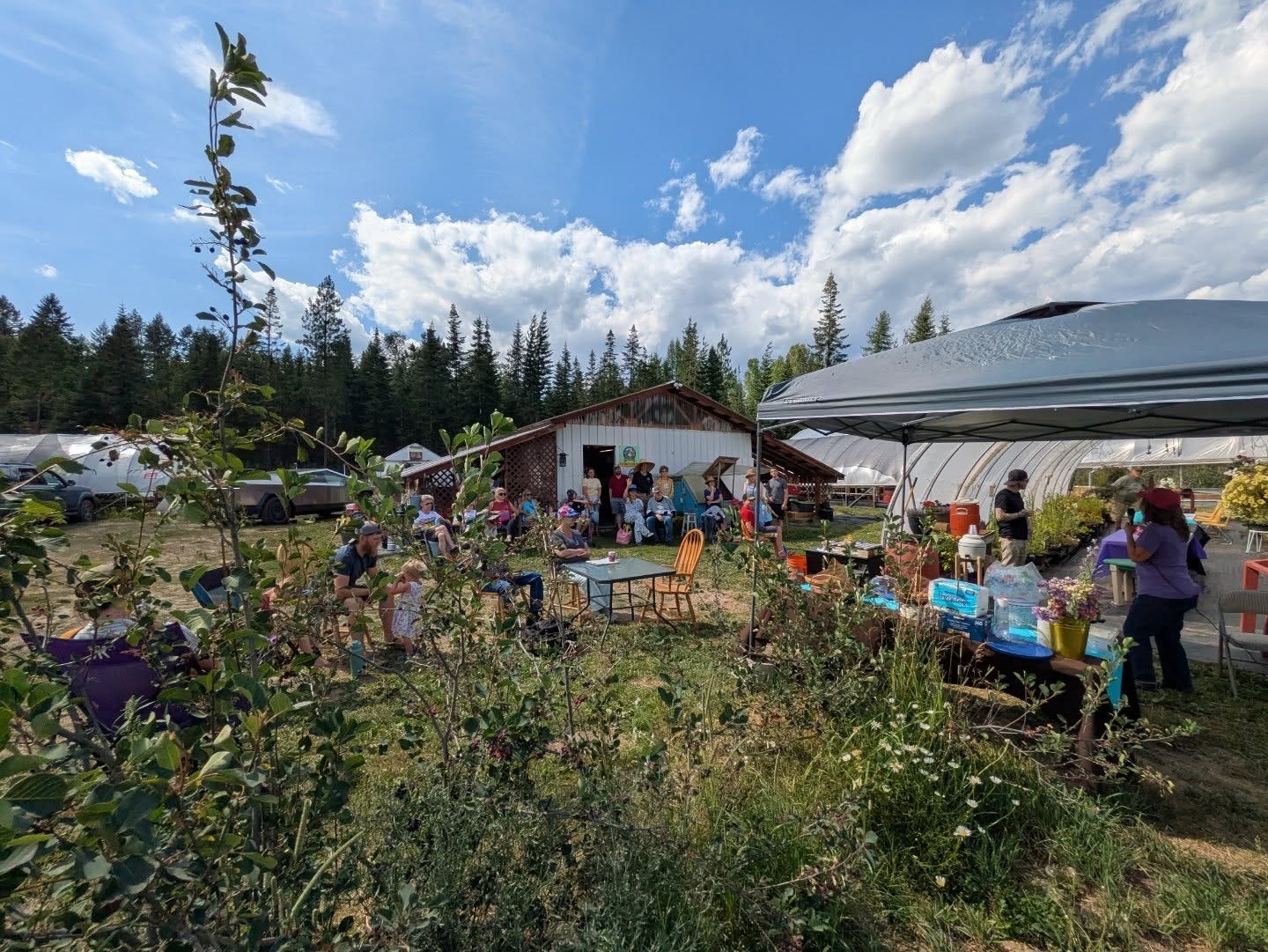
Live podcasts, informal discussions, shared meals, days spent at the lake, even going to shoot guns or help out pulling weeds or cleaning lettuce on the farm, a McKerracher Family Farm–Theory Underground event is something special and there’s nothing like it.
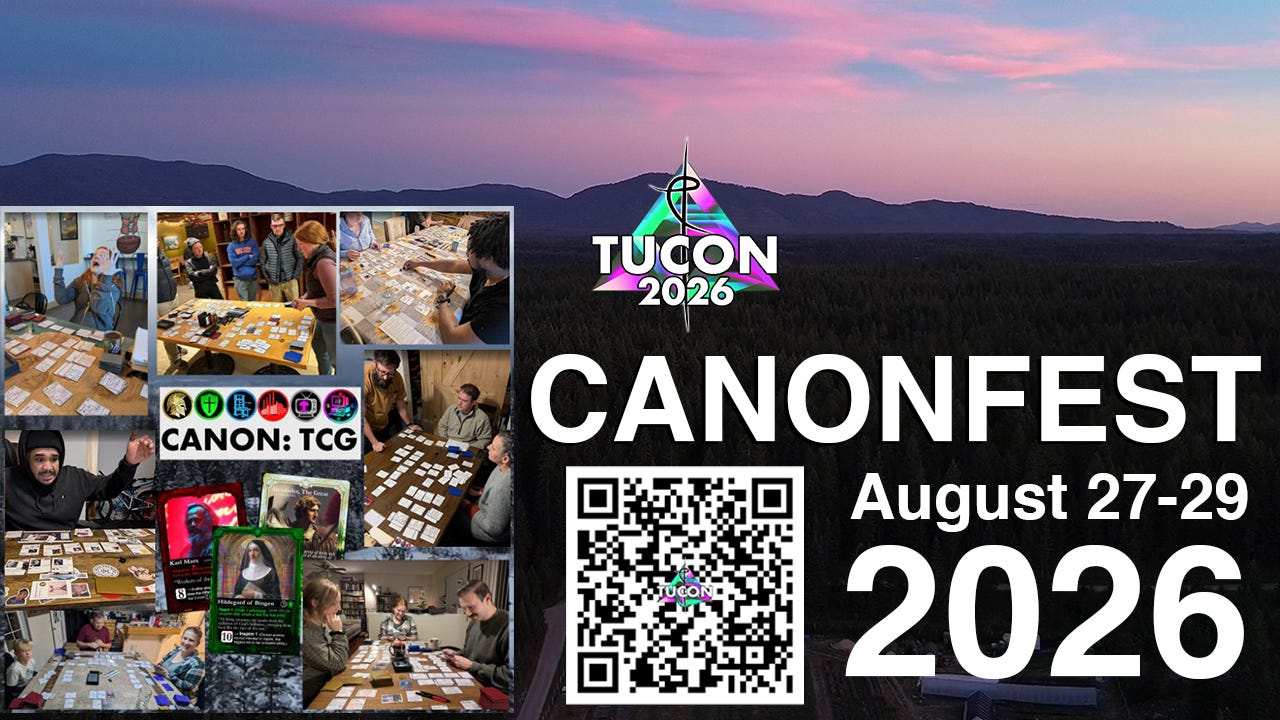
This fall we get to see how adding Canon: TCG will enrich the setting, relationships, and conversation. As Matthew Stanley said in his recent post about my liberal arts canon trading card game,
“‘Canon’ is fun (and I’m not biased because I beat Dave in my first game😜). But, it’s more than a game; it’s a technology for cultivating yourself and your community. In becoming familiar with the best that Western civilization has to offer, we elevate the quality of influences working on our minds (and hearts!), and we invite others to journey with us too. This project is about receiving an inheritance and making it our own, while navigating the peculiar challenges of our present media environment. This thing is still way way early. ‘Canon’ will make waves — you heard it here.”6
I’m glad Matthew can see Canon: TCG’s potential as a technology for cultivating oneself and community.7 So far that is exactly what the games I have hosted felt like. Canon: TCG comes out of all the lessons I’ve learned touring and conferencing—my hope is that CANONFEST will inject a whole new kind of energy into TUCON and re-frame how we relate to each other and great texts at McKerracher Family Farm. You can find out more about, and apply for, both TUCON and CANONFEST, here.8
The Future Mode of Life
I think that people will stop spending their money on Netflix and Disneyland and begin spending it on grounding out their online communities in Fourth Places. That is what the mid-2030s will look like. Those of us who are already doing this are simply pioneering the Fourth Frontier before Internet 4.0 goes mainstream.
It could, by the mid- to late 2030s, become normal for middle-class families to travel six times per year to various Fourth Places. It could become normal for kids leaving high school to spend a few years interning at various Fourth Places before they decide what to do as a career. It could become normal to prioritize real places over tourist destinations.
With such changes, it would not be surprising to see big changes in how people choose to work and live. Would you rather live in a really nice house in a town that you hate, or live in a humble little abode situated nice and close to a happening IRL hub? Would you rather live 45 minutes from a happening city, or out in the middle of nowhere but close to a high-speed rail that can get you to five happening IRL hubs within two hours?
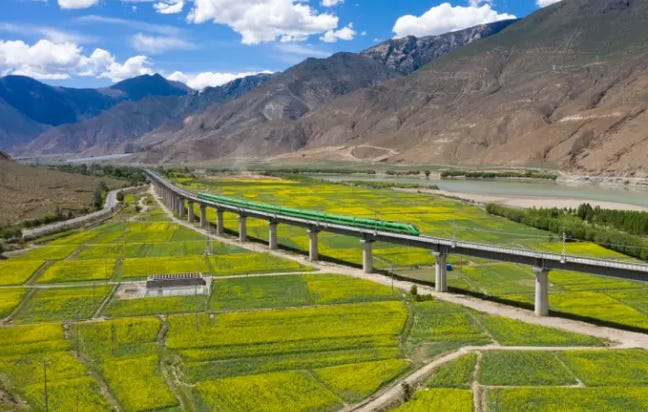
If not high-speed rails, then how about flying Ubers?
Either way, transportation infrastructure will change to respond to Internet 4.0., as a response to the rising demands of people who want more than isolated scrolling. For now, people who take action lead the way.
I want to make an honorable mention here to Nick Gallo, the person who has traveled more to experience, think on, and write about this emerging movement than perhaps anyone else. 9
People who are sick and tired of the same old same old are going on road trips and taking flights to places nobody else will know about until after these hubs have become well-established beacons of the new culture.
We are already seeing what Joel Salatin calls the “homesteading Tsunami.”10 Homeschool families have doubled in the last five years.11 More and more people with fake email jobs have moved out to rural parts of the country to begin building more resilient relationships with family, neighbors, and the land.
In a world of crumbling zombie cities, AI psychosis, and algorithmically curated addictions to entertainment, disembodied relationships, and a concomitant aversion to friction, we will only see a rise in more and more people making the exodus from towns that have melted into thin air right out from under their feet.
At the beginning of this piece, you might recall that I said Marx’s “all that is solid melts into air” is only one half of the ironclad law of capitalist modernity. The other half is about reterritorialization, meaning that places pass away but those who strike out make new ones. Having recently been to both Paris and London, it is quite clear that those once great cities are losing their sense of place, culture, and heritage. This is obvious now, but the fact was, it was true when our Founding Fathers left those places. They had already run their course and the writing was on the wall.
You might think that the same is true of the United States—for a lot of reasons. The American Revolution, as the most successful of modernity’s many, was captured by a fully institutionalized version of The American Dream. This dream became a commodity sold across the world. It was marketed as “freedom” and “democracy.” Billions were drawn into a kind of consumer disablement and dependence that fosters the dysfunction of broken homes and mental illness. These are similar to the wretched conditions that led to the mass exodus from the Old World to the New by people of action.
If that migration movement and pioneer ethos is part of The American Revolution, then what we are seeing with the rise of Internet 4.0 means that spirit is alive now more than ever. Reterritorialization, in an attempt for deliberate living and real community, is not just the “new thing” promised with the rise of Internet 4.0. We have reason to hope that this is an opportunity to reclaim a real sense of what it means to be human in the 21st Century. If my experience at the Wagon Box over the last weekend is any indication, this new phase of the Cyber Era is going to be epic—and there will be dancing. For this is not just about survival, it’s about human flourishing. For in the human the two are one and the same.
Thanks for reading.
Make sure to subscribe to this Substack to not miss out on more posts, as well as epic opportunities for IRL events.
Footnotes:
“Land-adjacent” meaning close to Nick Land—for whom the internet, capital, and technology more broadly are all inseparably a part of a grand design of a future singularity that is using the resources of its enemies, humanity, to construct itself. Not quite “an alien life form” but similar enough I figured I’d give the head nod.
You and Your Profile: Identity After Authenticity, Hans-Georg Moeller and Paul D’Ambrosio
I have not published all of these yet but the ones that are currently available can be seen here: https://www.youtube.com/playlist?list=PLlcbaQ1cp2TKO-102Fve08P0pwQauGaLe
“The Question Concerning Technology” by Martin Heidegger—I go to the version of this piece that is included in Basic Writings: From Being and Time (1927) to The Task of Thinking (1964).
Apply to be at TUCON26/CANONFEST August 27-29: https://forms.fillout.com/t/iVU7tADnAzus Video about it here:
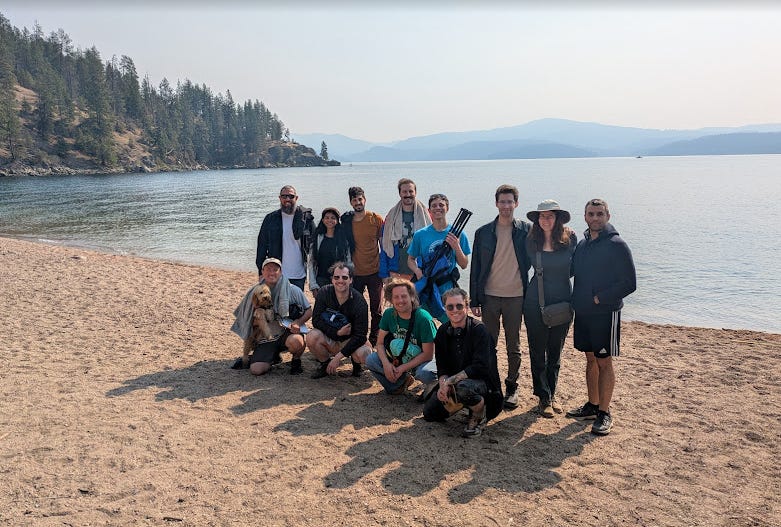
It was Mr. Gallo who put me onto The Wagon Box in the first place—he and Matthew Stanley. Gallo has also been super active in IRL retreats with other online educational communities, such as those of Michael Millerman and Johannes A. Niederhauser. Gallo has a new piece on a group that has been super active in Nashville. https://pamphleteer.co/post/farming-philosophy-and-fraternity/ It’s called The Meriwether Academy, a group that is doing amazing events at the intersection of Nature and Great Texts in Nashville. Here’s a picture of Gallo (to the far right) with the TU Retreat Crew last September.
They say the reason for this boom in homeschooling was COVID, when in reality, in most cases, it was because of how COVID was handled by K-12 institutions. It would be foolish to suspect that the rise of “gender affirming care” has no role to play either; I have not met a single homeschool parent who is not horrified by the risks of gender ideology being taught in schools, due to the real risks of lifelong castration if ushered onto the pipeline to “cross sex hormones” via what gets called “puberty blockers.”
If you read this whole piece as well as the footnotes, then here is a little easter egg bonus just for you: A recent session of the Philosophy of Stewardship seminar at TU, from when I was at The Wagon Box last week for the Homesteading Symposium: